The helmet cleaning industry is undergoing a silent revolution. With the rise of smart cities and the sharing economy, manual cleaning is being rapidly replaced by automated, intelligent solutions. The next generation of helmet cleaners is no longer just mechanical; they are becoming “IoT ready.”
In the near future, users will be able to activate a cleaning cycle via a mobile app, scan a QR code, and pay for the service digitally. Real-time data on machine health, water usage, and cleaning frequency can be sent back to the operator’s dashboard. This is especially crucial for rental kiosks in tourist areas or large logistics centers managing hundreds of helmets. Looking further ahead, we anticipate the integration of AI and computer vision into these machines. Cameras will be able to detect the specific level of soiling on a helmet, automatically adjusting the wash duration, water pressure, and drying time for maximum efficiency.
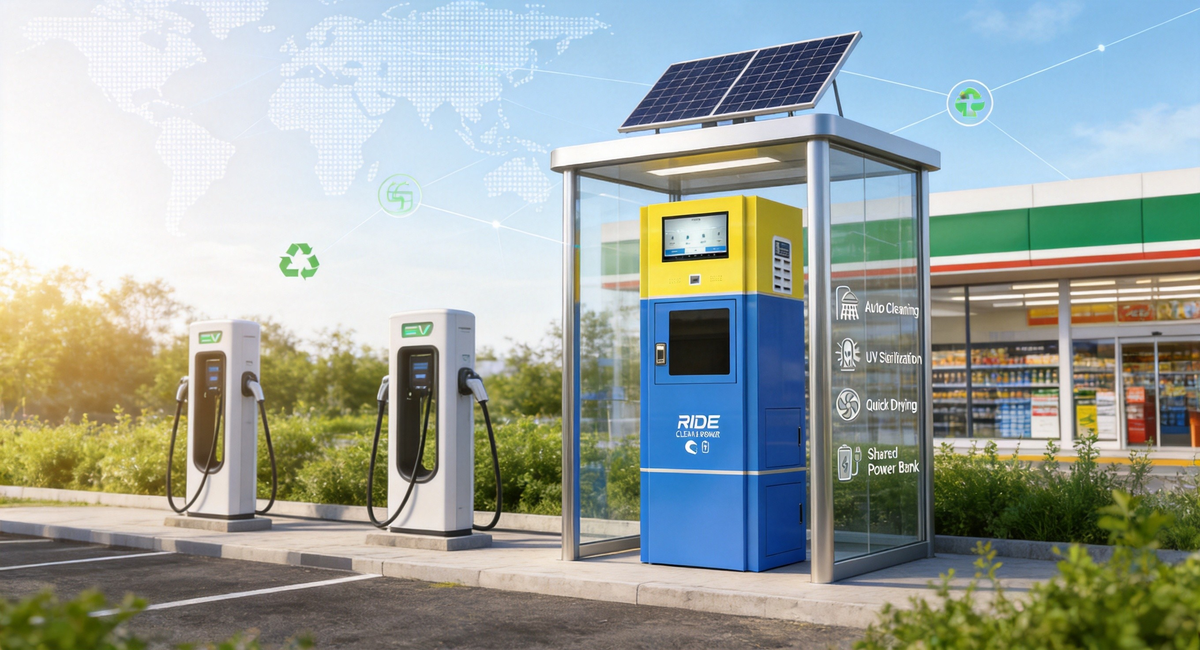
Furthermore, the evolution of unattended self-service kiosks is transforming business models. Operators can now place these smart machines in parking garages, convenience stores, or EV charging stations, turning them into 24/7 cash cows. Environmentally, sustainability is a global trend. Our machines are designed with eco-conscious materials and energy-efficient motors to reduce carbon footprints. As the world’s largest manufacturing hub, China, particularly the Zhongshan and Guangdong regions, has become the epicenter of innovation in this niche. For international buyers, choosing a technologically advanced and eco-friendly helmet cleaner is not just a purchase—it’s a long-term strategic partnership. It aligns with global environmental, social, and governance (ESG) standards, while simultaneously helping distributors and commercial customers secure a foothold in the rapidly expanding global mobility market across Southeast Asia, Europe, and North America.